Which rear delt exercises actually work? Reverse pec deck, cable rear delt fly, bent-over dumbbell fly, face pulls, single-arm cable fly, high-to-low rows, and band pull-aparts. All seven share one thing: the arm travels backward and out from the body without the elbow bending much.
The rear deltoid pulls your upper arm backward and outward. Any exercise that does this against resistance will train it. The best options are the reverse pec deck, cable rear delt flies, bent-over dumbbell flies, and face pulls. The setup matters more than the exercise choice: keep the elbow angle fixed, lead with the elbow, and stop the movement before your shoulder blades take over.
Rear delts get skipped for a simple reason. You cannot see them in the mirror, so they are easy to forget and hard to check. They also sit at the back of a shoulder that gets plenty of pressing volume at the front, which is why the imbalance is so common.
What the rear delt actually does
The deltoid has three heads. The front handles pressing and lifting the arm forward. The side lifts the arm out to the width of your body. The rear pulls the arm backward and outward, and assists when you rotate the shoulder externally.
That last function is why rows and pulldowns do not fully cover it. Those movements bend the elbow heavily, which brings the lats and biceps in as the primary drivers. The rear delt contributes, but it is rarely the limiting factor. To train it directly you need the elbow to stay relatively fixed so the shoulder does the moving.
The seven exercises
Reverse pec deck. The most reliable option because the machine fixes your path and your torso. Set the handles so your arms start in front of your chest at roughly shoulder height, then move them back and slightly out. Machine availability is the only real drawback.
Cable rear delt fly. Cross the cables, take the opposite handle in each hand, and sweep your arms back and out. The advantage over dumbbells is constant tension through the whole range, including at the top where dumbbells give you nothing.
Bent-over dumbbell fly. Hinge forward until your torso is close to parallel with the floor, let the dumbbells hang, then raise them out and back with a soft fixed elbow. Free, available anywhere, and the easiest to do badly. Keep the weight light enough that you are not swinging.
Face pulls. Rope on a cable at roughly head height. Pull toward your face, elbows high and wide, and finish with your hands beside your ears. This one trains the rear delts alongside the external rotators, which is why it earns a place in almost every programme.
Single-arm cable rear delt fly. One arm at a time across the body. The unilateral version lets you get a longer range and makes it obvious when one side is weaker, which it usually is.
High-to-low or wide-grip row. A row with the elbows deliberately flared out to about ninety degrees from the torso, pulling toward the upper chest rather than the waist. The elbow flare is what shifts the emphasis from lats to rear delts.
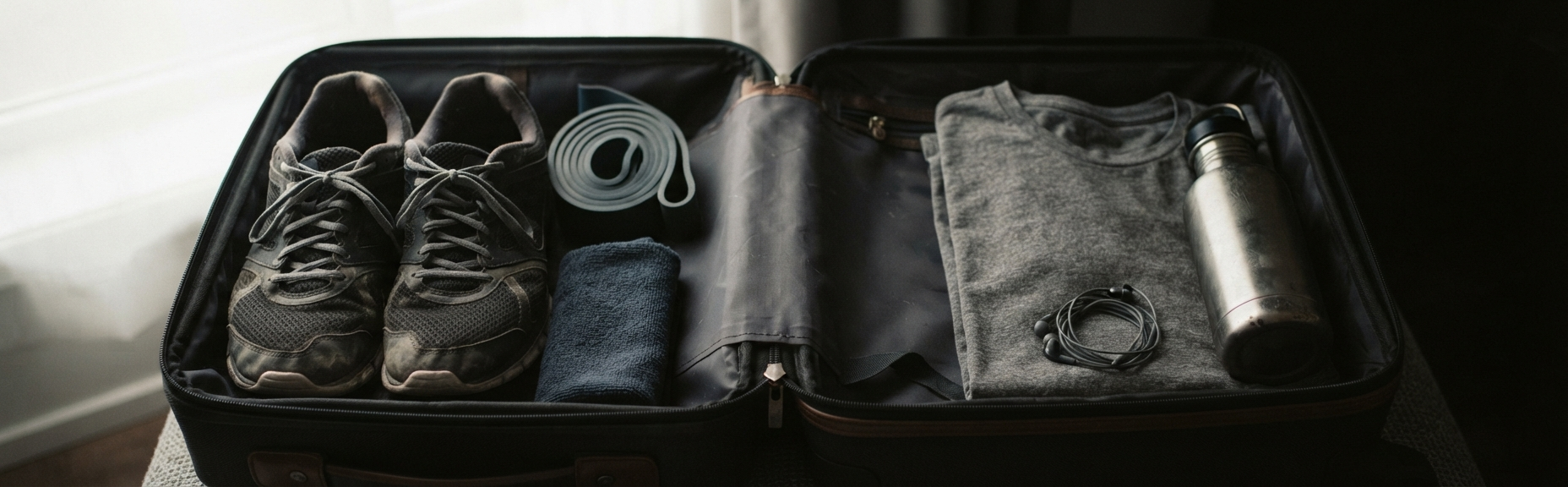
Band pull-aparts. Arms straight out in front, band at chest height, pull the band apart until your arms are wide. Endlessly repeatable, travel-friendly, and the easiest way to add rear delt volume without adding gym time.
Setup: the part that makes or breaks it
Three setup errors account for most wasted rear delt work.
Going too heavy. The rear delt is a small muscle with a short lever, so it simply cannot move much weight in isolation. Load it heavily and your traps, rhomboids, and momentum take over immediately. This is one of the few places where a genuinely light weight and a higher rep range, ten to twenty, produce more than a heavy one.
Squeezing the shoulder blades. When you retract your shoulder blades hard, the mid-back does the work. Let the shoulder blades stay relatively still and let the upper arm travel. This is the single most useful cue for the movement.
Bending the elbow mid-rep. If your elbow angle changes during the set, the movement has turned into a row. Set a soft fixed bend at the start and keep it there.
How much and how often
Two or three sets of a rear delt movement, two to three times a week, in the ten to twenty rep range. That is more frequent than most people train them, and the reason is that they recover fast at the loads they can actually handle.
The easiest way to fit that in is to attach a rear delt movement to sessions you already do rather than building a separate slot for it. Band pull-aparts between pressing sets cost you nothing. A set of face pulls at the end of any upper-body day is two minutes.
If you want the whole week structured, the training guides lay it out with exercises, sets, reps, and cardio work already placed, so shoulder work is distributed instead of squeezed in at the end when you remember it.
If your traps are doing the work, the weight is too heavy. Nothing else about the setup will fix that.